Hokkaido ToursAn Independent Guide Check Availability

Hokkaido Tours from Sapporo

Coaches and nine-seat vans leave central Sapporo before eight each morning for the lavender hills of Furano, the cliffs at Cape Kamui and the sulphur steam of Hell Valley. This page lines up the Hokkaido tours you can actually book, on price, hours out, what the ticket covers and the months each route runs.

Updated August 2026

  • Rated 4.3 to 4.9 on GetYourGuide
  • Free cancellation up to 24 hours
  • Listings checked August 2026

Quick answer

We currently compare nine guided day tours that start in Sapporo and come back the same evening. They split into four kinds of day: the flower run to Biei and Furano, the coast run to Cape Kamui and Otaru, the volcano run to Noboribetsu and Lake Toya, and the winter runs. The cheapest full day is the nine-seat van to the Biei hills at $42.59; the most booked is the Noboribetsu and Lake Toya coach with 331 reviews behind it. Almost none of them include lunch, and several leave the entrance fee to you.

Key takeaways

  • Prices run $42.59 to $202.79 per person and days run 9 to 11 hours, checked August 2026
  • Most listings cover transport and a guide only. What you still pay at the door
  • Lavender at Farm Tomita peaks 12-22 July; by mid-August it has been cut. Month by month
  • Boats have not entered the Otaru Blue Cave since a rockfall in July 2025. What that means now
  • Shiretoko, Abashiri drift ice and Hakodate are not day trips from Sapporo. Where these tours reach
  • Only two of the nine include hotel pickup; the rest meet at a fixed point at 07:50 or 08:00

Hokkaido Day Tours from Sapporo, Compared

Nine day tours, all bookable on GetYourGuide, all returning to central Sapporo the same day. Prices, ratings and review counts below were read from the listings in August 2026; booking, payment and cancellation happen on the platform, not here. Where a fee, a lunch or a boat ticket is missing from the price, it is written on the card.

Independent tour comparison
Last price check: August 2026
Fees verified against official tourism information
Traveller feedback reviewed: 700+ reviews

The Nine Days Side by Side

Read the fourth column first. Two of these listings hand you an attraction ticket worth 800 to 1,000 yen; the rest are a seat on a bus with a guide attached, and everything at the door is yours to pay.

Tour Price Hours Book What the price covers Runs Rating
Biei & Furano van $42.59 10 Details Transport, driver-guide, Shikisai-no-Oka ticket Flower season 4.8 (55)
Cape Kamui & Otaru $51.76 9 Details Transport and guide; cruise ticket extra Summer 4.7 (82)
Noboribetsu & Lake Toya $46.59 10 Details Transport, guide, hotel pickup; ropeway extra Year round 4.3 (331)
Asahiyama Zoo & Blue Pond $47.91 9 Details Transport, guide, zoo admission Year round 4.5 (48)
Furano & Biei coach $47.52 Full day Details Transport, guide, Shikisai-no-Oka ticket Flowers to autumn 4.6 (129)
Sapporo city & Jozankei $46.59 10 Details Transport, guide, hotel pickup; all doors extra Year round 4.7 (24)
Otaru ski day $202.79 9 Details Bus, full kit, lift pass, 2-hour lesson Ski season 4.9 (30)
Winter zoo & snowmobile $68.44 Full day Details Transport, guide, zoo admission; snowmobile extra Winter 4.4 (17)
H.I.S. seasonal coach $63.37 10 Details Transport, guide, gelato; lunch by package Three dated routes None stated

Two operators appear twice in this list. Japan Holiday Travel runs both the Furano coach and the winter zoo day, and YH International runs both the Noboribetsu circuit and the Sapporo city day, so booking one of each pair means the same company twice.

Live Availability and Prices

Dates and live prices for the most booked day in this catalog, the Noboribetsu and Lake Toya circuit, straight from the booking platform. Everything on this page was last read from the listings in August 2026.

Powered by GetYourGuide

How to Choose a Hokkaido Day Tour

Hokkaido is the size of Austria. What you are really choosing is which two hours of driving you are willing to do, and what you want to be looking at when the bus finally stops.

First, decide which direction you are driving

Every tour on this page is a wheel spoke out of Sapporo, and the four spokes barely overlap.

North-east, two to two and a half hours: Asahikawa and the Biei-Furano hills. This is the flower country and Asahiyama Zoo, and it is where five of the nine tours go. The drive is the price of admission: on a ten-hour day you spend four to five hours in a seat.

West, an hour and a quarter: Otaru and the Shakotan Peninsula. Shorter driving, and the only saltwater in the catalog. The Cape Kamui day reaches the cliffs; the ski day stops at Asarigawa, twenty minutes short of Otaru itself.

South, roughly two hours: Noboribetsu, Cape Chikyu and Lake Toya, all inside Shikotsu-Toya National Park. Volcanic steam, a caldera lake, an active cone with a ropeway up it.

Inside greater Sapporo: the city day never leaves the metropolitan area, which is why it fits six stops into ten hours while the northern tours fit four.

If you have one free day, take the direction you cannot easily do on your own. If you have three, take one from each and you will have seen the four faces of southern Hokkaido without repeating a landscape.

Check whether you are met or collected

This decides your morning more than the itinerary does. Only two of the nine listings include hotel pickup: the Noboribetsu circuit and the Sapporo city day, both from the Sapporo TV Tower or the Sapporo Tokyu REI Hotel. The Biei van collects from hotels within three kilometres of Sapporo Station between 07:30 and 08:00, which covers most of the central hotel belt but not Susukino's southern edge.

Everything else is a meeting point. The winter zoo day forms up at the Sapporo TV Tower information centre at 07:50 behind a white EasyGO flag. The ski day meets in the bus parking lot at the north exit of Sapporo Station, where construction has moved the pin more than once. The H.I.S. seasonal coach leaves from the ANA Crowne Plaza between 08:15 and 08:30.

Every one of these operators writes the same sentence in different words: the bus leaves on time and does not wait. Two of them state that a no-show forfeits the fare with no refund.

Coach, van, or something in between

A full-size coach carries forty-odd people, which means forty people filing off at a 20-minute photo stop and forty people finding the toilet. It is also why the coach days are cheap.

The Biei flower van is the exception here: nine seats, one driver who also guides, and enough flexibility that reviewers mention being given extra time rather than being counted back on board. Susanna from Italy, who went on 27 July 2026, wrote that there was "enough time to properly visit both flower fields, the lake and the waterfalls", which is not the usual verdict on a ten-hour flower day.

Several listings hedge the difference. Both Japan Holiday Travel tours and the Clover Travel zoo day say that when numbers are low the vehicle drops to a van and the driver gives basic commentary instead of a guide giving a tour. On the winter zoo day the listing is blunt about it: on a Hiace departure, "professional tour leader or guide service is not provided".

Read the language line, not the flag icon

All nine run in English, but English means different things here. The Furano coach guides in English, Chinese, Japanese and Korean, which in practice means each announcement four times. The Cape Kamui day states that on small departures the driver doubles as guide and that the group may be mixed-nationality.

Travellers do not seem to mind. Siddhartha from Japan, on 20 July 2026, wrote that it was "impressive he could speak three languages and also made all of us feel so welcome". The thing to calibrate is commentary volume: if you want a guided lecture on Ainu history and volcanic geology, a four-language coach is not the vehicle for it.

Then check what the day actually costs

The sticker price and the day price are different numbers on six of these nine tours. The Sapporo city day is the sharpest example: $46.59 buys the bus and the guide, and then the Hill of the Buddha wants 1,000 yen at the door, the seafood market wants whatever your bowl costs, and Jozankei wants the price of a coffee while you soak your feet.

Against that, the Asahiyama Zoo day at $47.91 has the 1,000-yen zoo ticket inside it, and both flower tours cover the 800-yen Shikisai-no-Oka gate. Work it out per day rather than per listing and the ranking moves. The full fee list is below.

Hokkaido Tours or Doing It Yourself

Hokkaido rewards a rental car more than anywhere else in Japan, and punishes you for one more than anywhere else in winter. Here is the arithmetic, honestly.

By train, only Asahikawa really works

The Limited Express Kamui and Lilac run Sapporo to Asahikawa in about 1 hour 30 minutes for 5,440 yen one way in a reserved seat. Since the timetable change every car is reserved, so there is no cheaper unreserved fare to fall back on. Round trip, that is roughly 10,900 yen before you have seen anything.

From Asahikawa station you still need the zoo bus, about 40 minutes each way, and Asahiyama Zoo closes at 15:30 in winter. The day works, but it is a zoo day and nothing else. The zoo tour costs about 7,300 yen at August 2026 rates, includes the 1,000-yen admission, and adds the Blue Pond, Shirahige Waterfall and Ningle Terrace to the same hours. On this one route the tour is simply cheaper than the train.

Biei and Furano are the harder case. Trains reach Biei and Naka-Furano, but Farm Tomita, Shikisai-no-Oka and the Blue Pond are all spread across farmland kilometres apart, served by seasonal buses that run a handful of times a day. In lavender season there is a temporary Lavender Farm station beside Farm Tomita; outside it, you are walking or waiting.

By car, the freedom is real and so is the snow

A rental car turns Biei into the best driving day in Japan: the Patchwork Road, the Panorama Road, a dozen unmarked hilltops with no coach park. Expect 6,000 to 9,000 yen a day for a compact plus the Do-Ō Expressway tolls, and add parking, 500 yen at the Blue Pond, 500 yen at Noboribetsu Jigokudani, 800 yen at Shikisai-no-Oka on top of the 800-yen entry from July to September.

Winter is a different sport. Hokkaido rentals come on studless tyres by law of the market, but ground blizzards on the Asahikawa road close sections at short notice, and the tours themselves warn about it: the zoo day states that stops missed to snow-season traffic are not refunded. If you have not driven on packed snow, the ski and zoo coaches are not a compromise, they are the sensible option.

The honest split: from June to September, if you are comfortable driving, rent the car for Biei-Furano and take a coach for the coast. From December to March, let someone else drive.

What a tour genuinely buys you

Four things, in order of how much travellers mention them. The driving, which is between four and five hours on the northern routes. The parking, which in July at Farm Tomita is its own small war. The entry logistics, on the two tours that hold your ticket. And the time discipline, a coach that puts you at six spread-out places between 08:00 and 18:00 is doing something a self-drive day rarely achieves without cutting one.

What it does not buy is lingering. Twenty minutes at the Blue Pond is twenty minutes. Esra Koktas from the Netherlands, on 7 August 2026, recommended the Furano coach precisely on those terms: "If you don't want to rent a car to get these spots, I would recommend this tour." That is the trade, stated plainly by someone who took it.

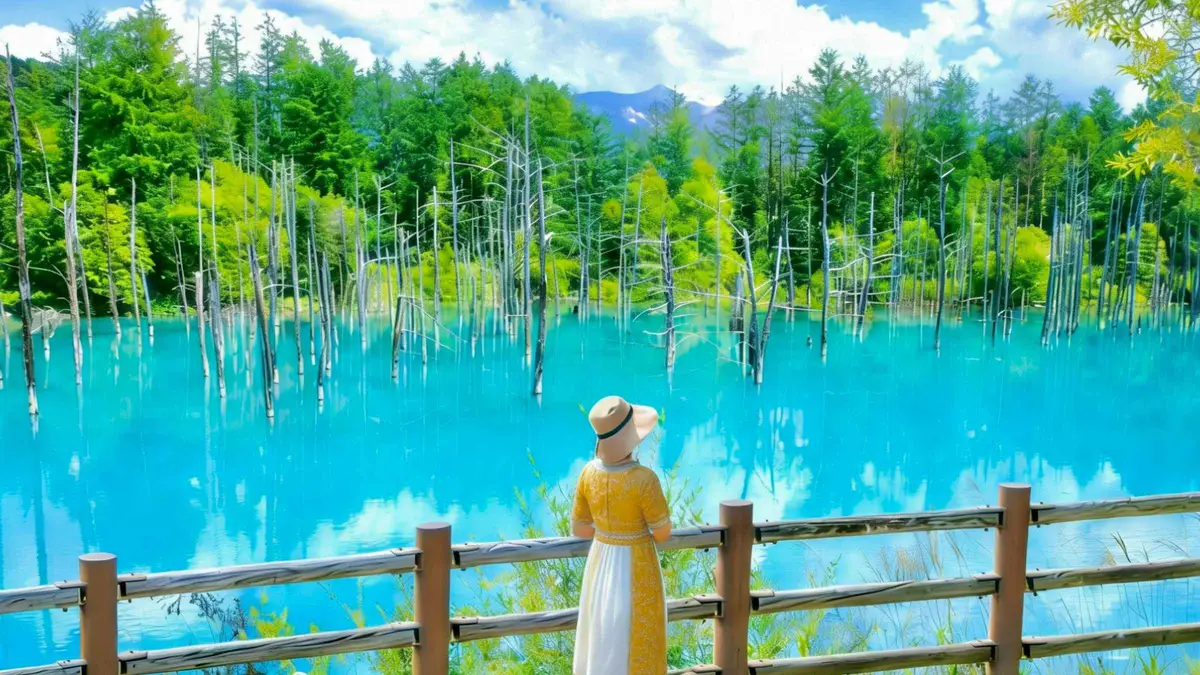
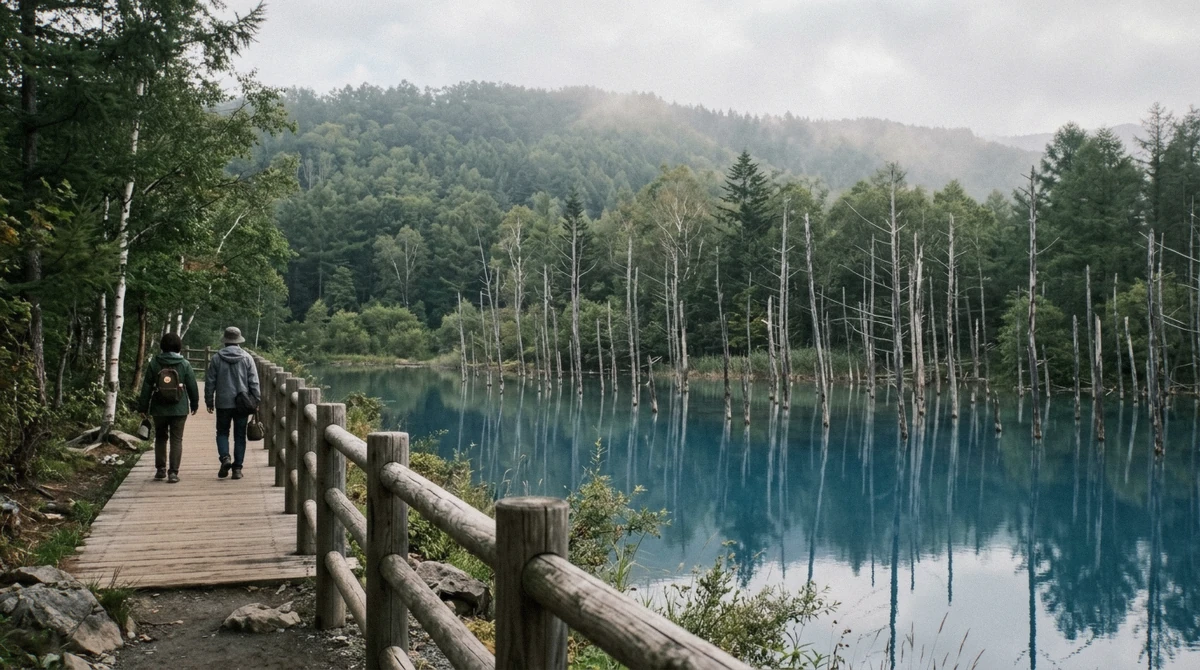
Two visitors on the boardwalk beside Shirogane Blue Pond in Biei, a stop on most Hokkaido tours from Sapporo, Japan
Shirogane Blue Pond, Biei. Free to walk into; every northern tour in this catalog stops here for 20 to 30 minutes.

Where These Tours Reach, and Where They Do Not

Five day-trip zones are within reach of a Sapporo morning. The famous names that are not on this list. Shiretoko, the Abashiri drift ice, Hakodate, Niseko's back bowls, sit four to six hours away one way, which is a stay, not a day.

  • Biei and Furano 2 to 2.5 hours each wayBlue Pond, Shirahige Waterfall, Shikisai-no-Oka, Farm Tomita, Ningle Terrace. Five of the nine tours come here.
  • Asahikawa 2 hours each wayAsahiyama Zoo and its winter penguin walk, usually bolted onto a Biei afternoon.
  • Shakotan and Otaru 1.25 to 2.25 hours each wayCape Kamui's cliffs, Shakotan Blue water, the Otaru Canal, Nikka's Yoichi distillery, Asarigawa's ski slopes.
  • Noboribetsu and Lake Toya 2 hours each wayHell Valley's sulphur vents, Cape Chikyu, the Silo Observatory, Mt Usu's ropeway, Lake Shikotsu on the way home.
  • Greater Sapporo 20 to 60 minutesHokkaido Shrine, Shiroi Koibito Park, the wholesale market, the Beer Museum, the Hill of the Buddha, Jozankei Onsen.

Shiretoko is a five-hour drive or a flight plus a bus; the Abashiri icebreakers sail from the Sea of Okhotsk coast, five and a half hours away, in February only; Hakodate is four hours south by limited express. All three need an overnight, and none of them appears in this catalog.

What the Ticket Price Does Not Cover

Fees verified against official tourism information, August 2026. Bring cash: several of these sites take notes only, and the Hill of the Buddha accepts 1,000-yen bills alone.

The doors that charge

Asahiyama Zoo, 1,000 yen for high-school age and up, free below that. Included on the zoo day and the winter zoo day. Summer hours are 9:30 to 17:15 from 29 April to 15 October 2026; winter hours are 10:30 to 15:30 from 11 November to 7 April, and the winter session is the one with the penguin walk.

Shikisai-no-Oka, 800 yen for high-school age and up from July to September, 500 yen for elementary and junior high, free below; open 8:40 to 17:30 from June to September. The rate went up in 2026. Included on both flower tours and on the H.I.S. autumn packages.

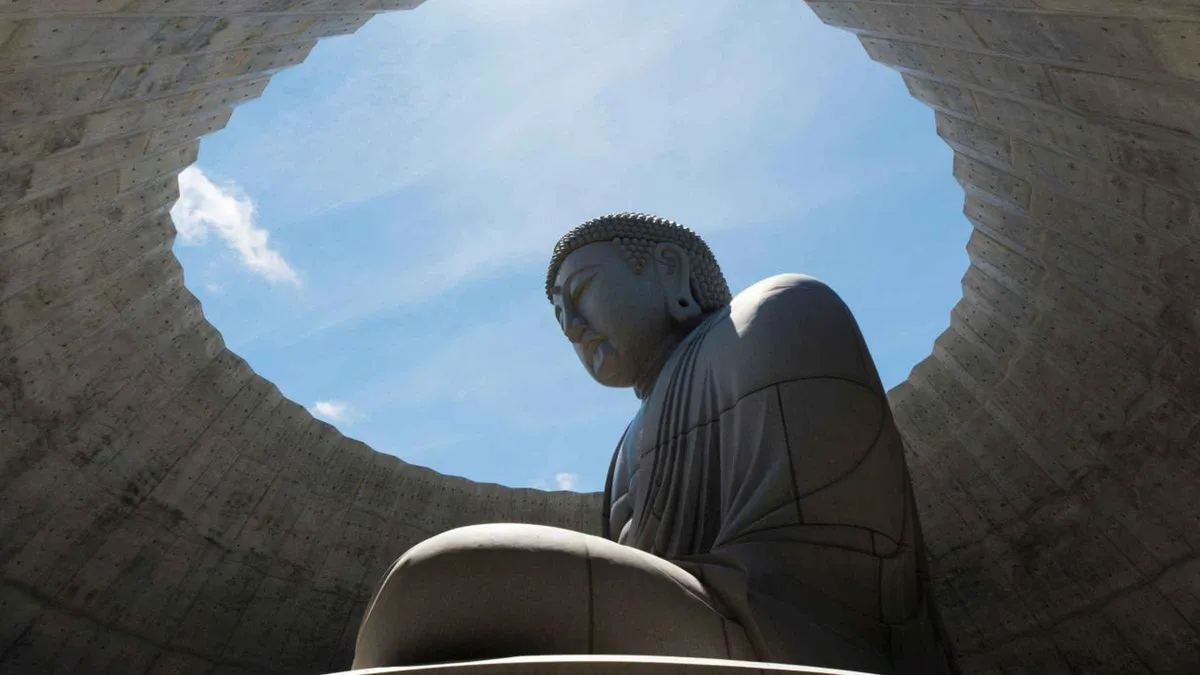
Hill of the Buddha, 1,000 yen for adults, free for elementary age and under, cash in 1,000-yen notes only. Open 9:00 to 16:00 April to October, 10:00 to 15:00 November to March. Not included on the city day that visits it.

Mt Usu ropeway: not included on the Noboribetsu circuit, which lists the ticket as an extra-fee stop.

Blue Cave cruise: not included on the Cape Kamui day; it is bought as an add-on at checkout, and the operator warns that on-site tickets are usually sold out.

The ones that are free, and the parking that is not

Shirogane Blue Pond is free to walk to; the car park is 500 yen, which is only your problem if you drive. Noboribetsu Jigokudani is free, parking 500 yen. Cape Kamui is free. Farm Tomita has never charged admission and is open 8:30 to 18:00 through the 2026 season, 20 June to 10 August. Ningle Terrace is free, roughly 10:00 to 20:45, fifteen craft cabins on a forest boardwalk. Otaru Canal, Hokkaido Shrine and the outdoor part of Shiroi Koibito Park are free; the paid attractions inside the Shiroi Koibito buildings are not, and are excluded on the city day.

One fee catches people out: the alpaca ranch on the H.I.S. autumn routes is 500 yen for 16 and over, 300 yen for ages 6 to 15. The Biei van also offers alpaca feeding at Shikisai-no-Oka for 500 yen.

Lunch, which is almost never included

Six of the nine listings exclude lunch outright. The Biei van includes a buffet and all-you-can-eat melon, but only if you book the Saturday option. The Furano coach includes it on some packages and not others. The H.I.S. seasonal coach codes it into the package name: S1-2 and S2-2 come with the buffet and melon, W3-2 with Biei pork, and the rest with nothing.

Both Furano operators give the same practical advice, which is worth taking: in July and August the restaurants along the flower route are swamped, and bringing onigiri or sandwiches saves you standing in a queue with forty other people from your own coach.

Sapporo Month by Month: Snow and Temperature

Bars are average monthly snowfall in Sapporo, in centimetres; the figure underneath is the average daily high in Celsius. Sapporo takes 4.79 metres of snow in an average year, and almost all of it falls in four months, which is why this catalog has a summer half and a winter half with very little in between.

  • Snow season (December-March)
  • Shoulder (April-May, October-November)
  • Green season (June-September)

Averages from the Japan Meteorological Agency normals for Sapporo. The flower tours and the coast tours run in the green season; the ski and snowmobile days run in the snow season; April, May and November are the two windows when several routes stop selling.

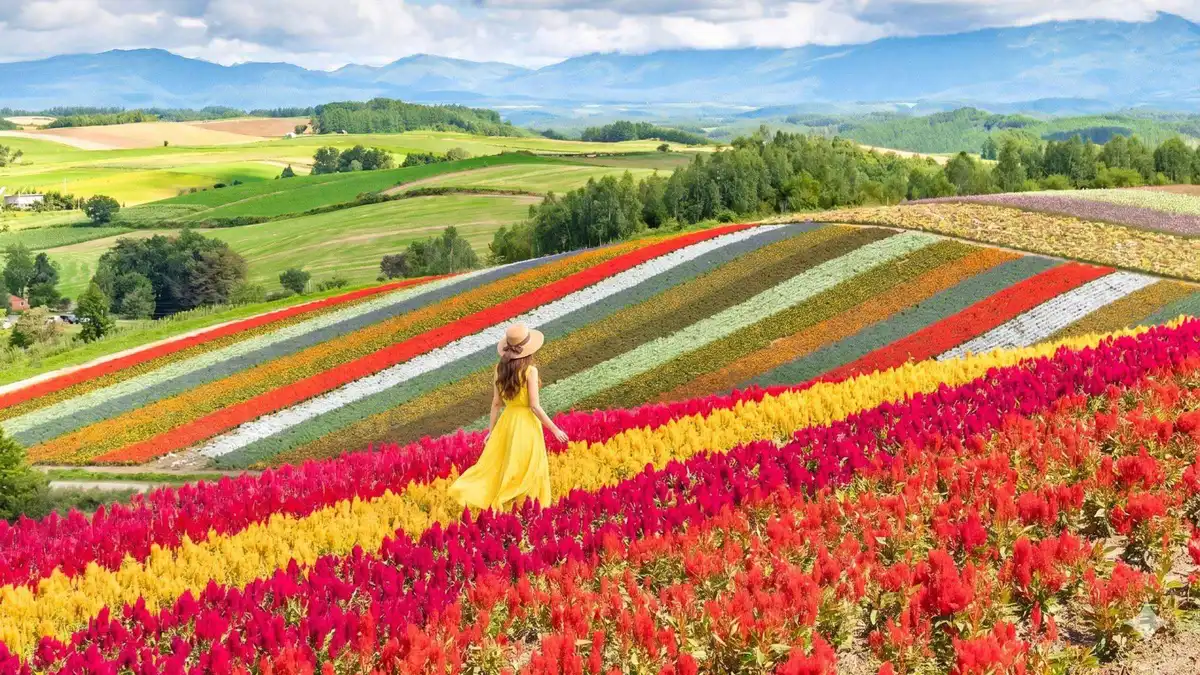
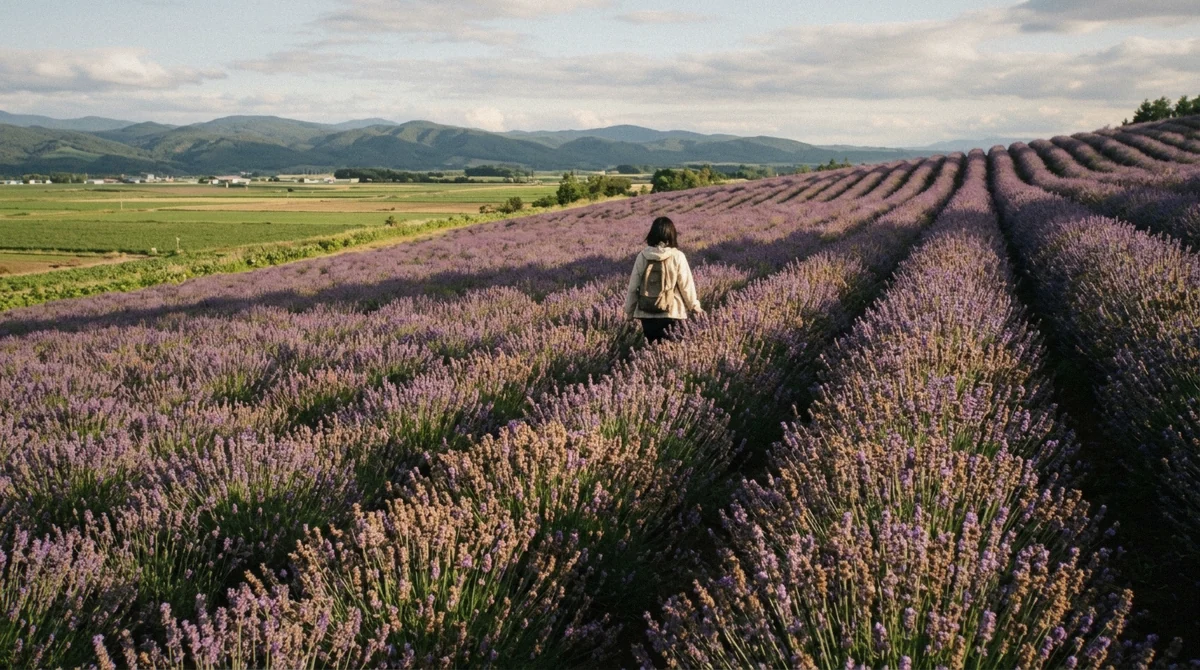
Lavender rows running downhill toward the Tokachi mountains at a Furano farm in mid-July on a Hokkaido tour from Sapporo
Furano in mid-July. The 2026 lavender season ran 20 June to 10 August, peaking between the 12th and the 22nd.

Which Tour Runs in Which Month

Hokkaido's headline sights are on a tighter calendar than most first-time visitors expect. Two weeks either side of a date can be the difference between purple fields and a mown meadow.

June to early August: the flower window

Farm Tomita's 2026 season runs 20 June to 10 August, and the lavender peak is roughly 12 to 22 July. The farm publishes a daily lavender forecast, which tells you how narrow the window is. Shikisai-no-Oka is broader, it plants in bands and rotates them, so from June to September there is always something in colour, which is why the tours that pay for its 800-yen gate can sell all summer.

The honest warning came from a traveller, not an operator. Esra Koktas, riding the Furano coach on 7 August 2026, wrote: "August is not the lavender season. Nevertheless I took my one of the best photos of my trip at Farm Tomita." Both things are true. If lavender is the reason you are flying to Hokkaido, book the second and third week of July and accept the crowds that come with it.

The coast tours are also summer products, for a different reason: the gate onto the Cape Kamui trail keeps seasonal hours, roughly 8:00 to 18:30 at the June peak but only 10:00 to 15:00 from December to March, and it shuts entirely in bad winter weather.

Late September to October: colour without the queues

Autumn arrives in the Daisetsuzan mountains in the third week of September and reaches Biei and Furano through October. The H.I.S. seasonal coach codes this as its S2 route, running 10 August to 31 October with Shikisai-no-Oka's admission included, and the Furano coach sells its "Colored Hokkaido" itinerary into the same window.

This is the quiet sweet spot. Hotel rates in Sapporo sit below both the July flower rush and the February festival, the light is better for photographs than the summer haze, and Jigokudani looks its best with the surrounding hillsides turned. The Noboribetsu circuit is unchanged from summer, since steam does not have a season.

December to March: the snow half of the catalog

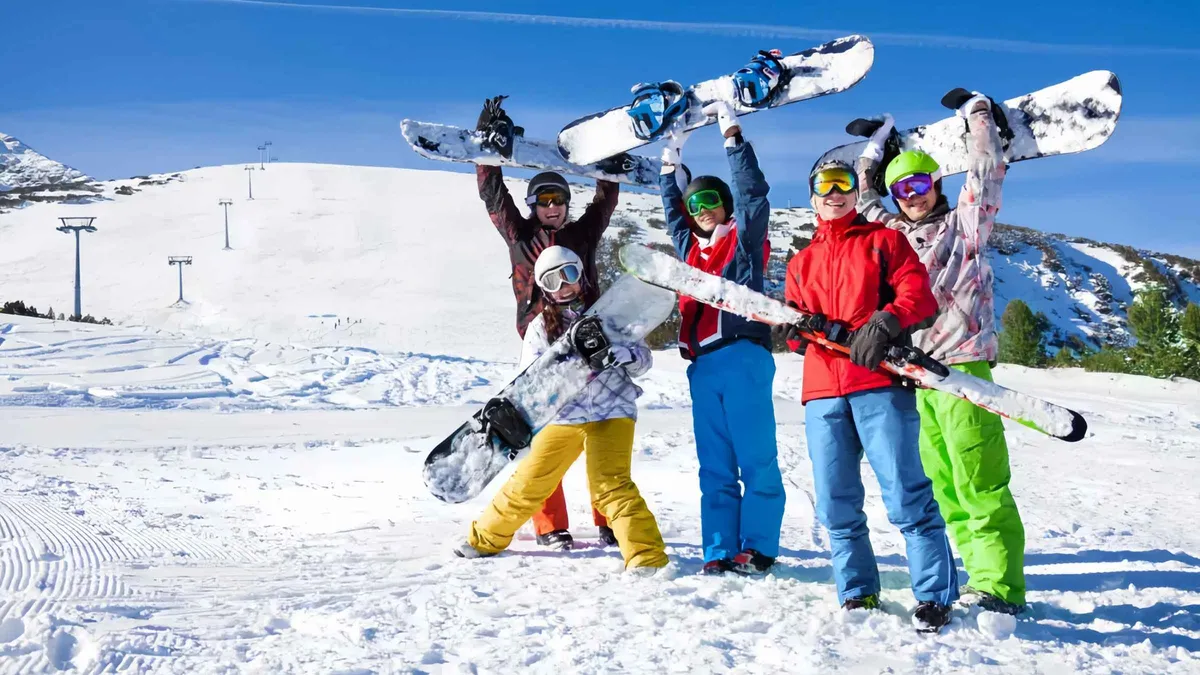
Two tours exist only for these months. The ski day at Asarigawa puts a beginner on a lift pass with a two-hour lesson, and the winter zoo run pairs Asahiyama's penguin walk with a snowmobile session at Biei Chiyoda Farm. The H.I.S. coach switches to its W3 route from 1 December 2026 to 31 March 2027, which swaps the flower farms for Biei Shrine, the Christmas Tree No Ki and greenhouse lavender at Farm Tomita.

One date to plan around: the 77th Sapporo Snow Festival runs 4 to 11 February 2027 across Odori Park, Susukino and Tsudome. Winter tour seats around those dates go first and Sapporo hotel rates rise sharply. Book both further ahead than you would in any other month.

What does not run in winter: the Cape Kamui coast day, in practice, because of the gate hours, and the flower tours, obviously. The Asahiyama Zoo and Blue Pond day does run, the Blue Pond is illuminated in the dark months, lit until 21:00 through the winter season, but the operator is candid that snow-season traffic can eat stops, and does not refund for it.

April, May and November: the thin months

These are the awkward weeks. The snow has gone or is going, the flowers are not up, and Asahiyama Zoo closes for two changeover periods, 8 to 28 April and 4 to 10 November in the 2026 schedule. Several of the seasonal listings simply have no departures.

What still works: the Noboribetsu and Lake Toya circuit, which runs year round, and the Sapporo city day, which is indoors-adjacent enough not to care. May is also the one month when Hokkaido gets the cherry blossom that the rest of Japan had six weeks earlier. Maruyama Park and the grounds of Hokkaido Shrine, both on the city day's route, are where Sapporo goes to see it.

Status Check: the Otaru Blue Cave in 2026

One product in this catalog is named after a cave that boats are not allowed to enter. It is worth knowing before you book, not after.

What happened, and what runs now

On 17 July 2025 a rock roughly two metres across fell from the wall beside the entrance to the Otaru Blue Cave. Nobody was hurt. The Otaru Blue Cave Council, the safety body the local operators sit on, suspended entry into the cave.

That suspension holds through the 2026 season. Cruises sail from Golden Week onward, and they run out along the Shakotan coast to the mouth of the cave, but they do not go inside. Anyone selling you the interior right now is selling you something that does not exist.

The operator of the Cape Kamui and Otaru day states this in its own listing, to its credit: "Due to recent rockfalls inside the cave, our cruise will no longer enter the cave interior and will only sail around the outer area of the Blue Cave." Two further details are easy to miss. The cruise ticket is not in the tour price, it is an optional extra at checkout, and the operator says on-site tickets are very often sold out, so buying on the day is a gamble. If wind or heavy rain cancels the sailing, the tour extends your time on the Otaru Canal instead.

The day is still a good day: Cape Kamui's cliffs and the Shakotan Blue water are the real headline, and the coastal cruise is scenic with or without the cave. Just book it for the coast, not for the cave. Status verified against the Otaru Blue Cave Council and 2026 operator notices, August 2026.

Day Tours or a Multi-Day Hokkaido Package

Search "Hokkaido tours" and most of what comes back is a seven-to-twelve-day escorted package. That is a different product from everything on this page, and it suits a different trip.

What a package does that a day tour cannot

It moves you. A multi-day itinerary sleeps in Sapporo, then Asahikawa or Sounkyo, then Abashiri or Utoro, then Kushiro, and that is the only realistic way to see the Shiretoko Peninsula, the Sea of Okhotsk drift ice in February, the red-crowned cranes at Kushiro or the Blue Pond and the Shiretoko Five Lakes in the same trip. It carries your luggage between hotels and it books the ryokan.

The cost is control. You go where the coach goes, on the operator's dates, at a per-day price several times the ones on this page, usually with international flights or a Tokyo add-on bundled in. Operators like All Japan Tours, InsideJapan and Samurai Tours build these, and they are who ranks above this page for the broad search term.

What we compare here, and what we do not

This site compares individually bookable day tours that leave Sapporo and return the same evening. We do not sell, resell or compare multi-day escorted packages, and we do not take a booking of any kind, every tour here is booked on the platform's own site.

The practical case for day tours: if you are already spending four or five nights in Sapporo, which many people do, because the food and the Susukino evenings are half the reason to come, you can build the same greatest-hits list one day at a time, choose your own hotel, keep your evenings free, and cancel any of it up to 24 hours ahead. Every listing on this page carries free cancellation at 24 hours and reserve-now-pay-later. No escorted package does.

The case against: you will not reach eastern Hokkaido this way. If Shiretoko's brown bears or the drift ice are the point of your trip, book a package or plan an overnight, and use this page for the two or three days you have in Sapporo at either end.

A Sapporo Week Built from These Tours

One way to stack them so no two days repeat a landscape, assuming a summer visit and five full days based in the city. Swap the flower day for the ski day and the winter zoo day and it works just as well in February.

  1. Day 1

    Sapporo on foot, no tour

    Odori Park, the Nijo Market, the Beer Museum and a first night in Susukino. Jet lag and a 07:30 pickup do not mix, and you will want a day to work out where the meeting points actually are.

  2. Day 2

    The flower day north

    The [Biei and Furano van](#tour-1) or the [Furano coach](#tour-5), depending on whether you want nine seats or forty. Out at 08:00, Blue Pond by 10:30, both flower farms in the afternoon, back around 18:00. The longest driving day of the week, do it while you are fresh.

  3. Day 3

    The coast

    The [Cape Kamui, Otaru and Blue Cave coast day](#tour-2). Shorter driving, sea air, and an entirely different Hokkaido from yesterday's farmland. Add the cruise ticket at checkout rather than hoping on the day.

  4. Day 4

    A day off the bus

    Nothing booked. Maruyama, the Hokkaido Museum, an onsen, or the train to Otaru on your own for the glass workshops and the sushi street that the coach day skips. Three consecutive ten-hour tours is more than most people enjoy.

  5. Day 5

    Volcanoes and the caldera

    The [Noboribetsu, Cape Chikyu and Lake Toya circuit](#tour-3), with hotel pickup so the morning is easy. Budget cash for the Mt Usu ropeway if the weather is clear; the view over the caldera is the reason to take it.

  6. Day 6

    The city day, then dinner

    The [Hokkaido Shrine, Hill of the Buddha and Jozankei day](#tour-6) covers the six things inside greater Sapporo that are awkward without a car, and lands you back in town in the early evening with a foot bath already behind you. Bring 1,000-yen notes.

What to Bring on a Hokkaido Day Tour

Two lists, because a July coach day and a February coach day are not the same trip.

June to September

Cash, first, the market stalls, the alpaca pen, the ropeway and the Hill of the Buddha are all cash-first, and the Buddha takes 1,000-yen notes only. Then sun cover: the Biei hills are open farmland with almost no shade, and the operators themselves list a sun hat and sunglasses. Layers, because 26 °C in Sapporo can be 18 °C and windy on the Cape Kamui trail. Comfortable shoes for the zoo's slopes and the waterfall paths. A power bank, which one operator lists outright after a decade of ten-hour days.

And food, if you are on a route without lunch. Both Furano operators recommend bringing onigiri or sandwiches rather than queueing in July.

December to March

Boots with a real tread. Sapporo's pavements are polished ice by January, and more visitors are hurt walking to the meeting point than doing anything on the tour. Snow grips that clip over a sole cost a few hundred yen in any convenience store and are the single best purchase of the trip.

Then the usual cold-weather stack: waterproof outer layer, gloves, the ski day supplies a helmet and goggles but explicitly not gloves, hat, and hand warmers, which are sold everywhere. Allow more time to reach a 07:50 meeting point than the map says, because snow slows the subway exits and the pavements both.

One scheduling rule for winter, straight from two of the operators: do not book a flight, a Shinkansen or a dinner reservation for the evening of a tour day. Snow delays on the Asahikawa road are routine and nobody refunds a missed flight.

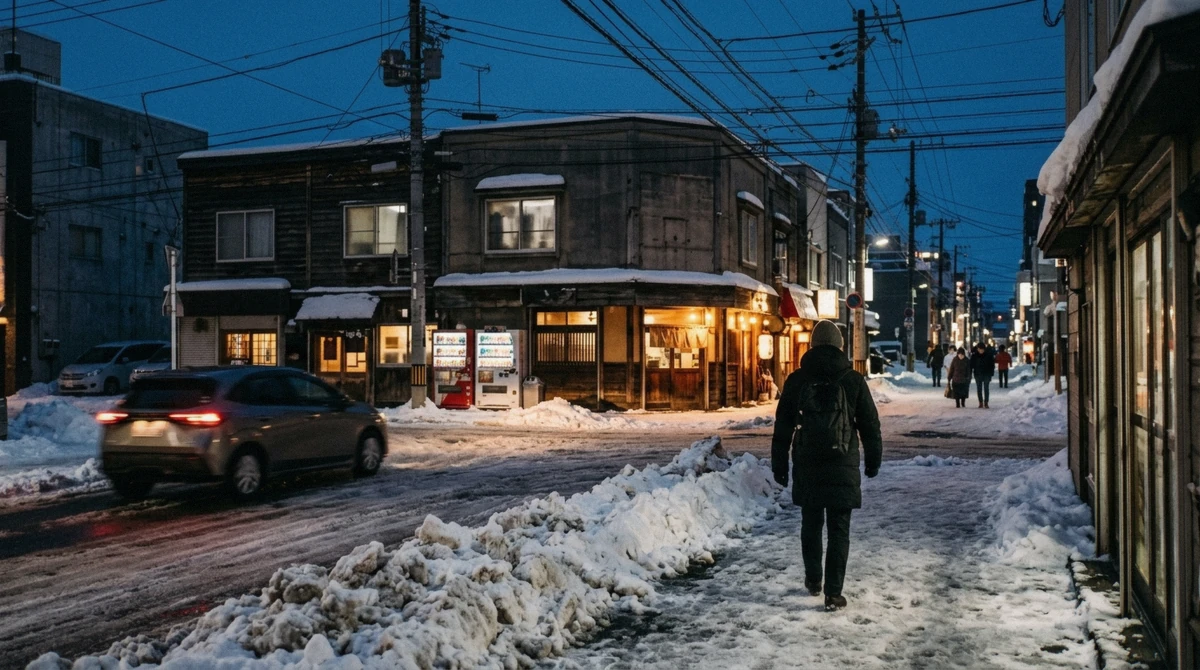
A snowbanked street corner in central Sapporo at dusk in February, the season for winter Hokkaido tours from Sapporo
Central Sapporo in February. Sapporo takes 4.79 m of snow in an average year, and the pavements are the hazard, not the tours.

What Travellers Said After Going

★★★★★ ★★★★★
Lisa, our tour guide, was amazing with her high energy. She nicely explained each point on the route and gave some tips about what to eat, what to buy. If you don't want to rent a car to get these spots, I would recommend this tour. P.S. August is not the lavender season. Nevertheless I took my one of the best photos of my trip at Farm Tomita.
Esra Koktas · Netherlands · August 2026
★★★★★ ★★★★★
Distance was quite far but our driver Tommy was very good, polite and professional. The flower field was breathtaking beautiful. The buffet lunch was delicious. We were given enough time for each site.
Heidy · United States · September 2025
★★★★★ ★★★★★
Vivi is the best! She spoke seamlessly between English, Mandarin, and Japanese. We visited three temples/shrines, a free foot bath, a cute London themed rose garden, the Sapporo Beer Museum, and a seafood market. Well worth the money. I recommend this if you'd like to fit in as much sightseeing as possible in one day.
Gloria · United States · June 2026
★★★★★ ★★★★★
Great guides and bus driver! Super friendly and professional. Great experience with the ski resort. Excellent skiing. Bus driver was great driving in snow. I would book this tour again.
L · Japan · February 2026
★★★★★ ★★★★★
Travelers praise the organized, informative guides and striking scenery at Cape Kamui. Some travelers say more time at Cape Kamui would prevent a rushed walk and restroom break.
GetYourGuide review summary · 50 verified reviews, Cape Kamui day · August 2026
★★★★★ ★★★★★
Travelers describe efficient logistics, helpful guides, and scenic stops that cover a lot in one day. Some travelers mention the bear ranch stop feels uncomfortable and suggest removing it or offering a clear alternative.
GetYourGuide review summary · 118 verified reviews, Noboribetsu circuit · August 2026

Verified GetYourGuide reviews for the tours on this page, quoted with their original dates, including the critical ones.

Hokkaido Tours: Common Questions

Do you need a tour in Hokkaido, or can you do it yourself?

It depends entirely on the route. Sapporo itself needs no tour, the subway and your feet cover it. Otaru is 35 minutes by local train. But Biei and Furano are farmland with the sights spread kilometres apart on thin seasonal bus routes, and Asahiyama Zoo eats a whole day by train for 10,900 yen in fares alone. Those are the routes where a coach earns its price. In winter, add the driving itself: unless you are used to packed snow, the tours that run north are the sensible choice rather than the lazy one. See are day trips worth it and the Sapporo to Furano and Biei options for the full comparison.

How much does a Hokkaido day tour from Sapporo cost?

Between $42.59 and $202.79 per person on the nine listings compared here in August 2026. The sightseeing coaches cluster tightly between $42 and $68; the outlier at the top is the Otaru ski day, which includes the lift pass, full equipment hire and a two-hour lesson, so it is not really the same product. Budget on top for lunch, which six of the nine exclude, and for the entrance fees listed above. We break the whole day's spend down in what a day trip really costs.

What is the best time of year for Hokkaido tours?

Mid-July for lavender, when Farm Tomita peaks between the 12th and the 22nd. Late September to October for autumn colour, lower hotel rates and better light. February for snow, the Sapporo Snow Festival on 4 to 11 February 2027, and the winter penguin walk at Asahiyama Zoo. Our month-by-month season guide works through every window. April, May and November are the thin months: the flowers are not up, the snow is going, and several seasonal tours simply have no departures. Month by month.

Do Hokkaido tours include entrance fees and lunch?

Rarely both, often neither. Two listings include an attraction ticket: the Asahiyama Zoo day covers the 1,000-yen zoo admission, and both flower tours cover the 800-yen Shikisai-no-Oka gate. Lunch is excluded on six of the nine, included conditionally on two, and package-dependent on the H.I.S. coach. Every tour page here lists what is in and out, with the date the listing was checked.

Do the tours pick up from Sapporo hotels?

Two do: the Noboribetsu and Lake Toya circuit and the Sapporo city day, both from the Sapporo TV Tower or the Sapporo Tokyu REI Hotel. The Biei van collects from hotels within three kilometres of Sapporo Station between 07:30 and 08:00. The other six use a fixed meeting point, most often the north exit of Sapporo Station or the TV Tower information centre, and every operator states that the vehicle leaves on time and does not wait.

Are Hokkaido tours run in English?

All nine here run in English, but several run in three or four languages at once, which means each announcement repeated. The Furano coach guides in English, Chinese, Japanese and Korean. Two listings note that on small departures the driver guides instead of a dedicated guide, with limited commentary. If you want depth rather than logistics, the smaller vehicles deliver more of it.

Is the Otaru Blue Cave open in 2026?

The cruises sail, but they do not enter the cave. Entry was suspended after a two-metre rock fell from the wall by the entrance on 17 July 2025, and the suspension holds through the 2026 season, boats run to the mouth of the cave and turn. The coast day that visits it says so in its own listing, and sells the cruise as a paid add-on rather than including it. Full status.

When is lavender season in Furano?

Farm Tomita's 2026 season runs 20 June to 10 August, with peak bloom roughly 12 to 22 July. The farm publishes a daily lavender forecast so you can check before you commit. By mid-August the lavender has been cut, though Shikisai-no-Oka rotates other flowers into September, which is why the flower coach still sells then.

What can you actually see from Sapporo in one day?

Four to six stops, and about four hours of driving on the northern routes. A realistic day is the Blue Pond, a waterfall and two flower farms; or Hell Valley, a cliff cape and a caldera viewpoint; or the zoo plus three Biei stops. What you cannot fit is anything in eastern Hokkaido. Shiretoko, the Abashiri drift ice and Hakodate are all four to six hours away one way. Where the tours reach.

How many days do you need in Hokkaido?

Four or five nights in Sapporo covers the whole of this catalog without doing two long coach days back to back, see the sample week above. Reaching Shiretoko, Kushiro or the February drift ice means moving hotels, which is where the multi-day escorted packages come in; those are a different product and we do not compare them here. Day tours versus packages.

What is there to do in Hokkaido in winter?

Three of the tours here are built for it: a beginner ski day at Asarigawa with gear and a lesson included, a winter run north combining Asahiyama Zoo's penguin walk with snowmobiling at Biei Chiyoda Farm, and the H.I.S. coach's winter route through Biei Shrine and greenhouse lavender at Farm Tomita. Add the Sapporo Snow Festival, 4 to 11 February 2027 across Odori, Susukino and Tsudome, and book earlier than you would in any other month. Full detail in our guide to Hokkaido in winter, including what closes.

Who runs these tours, and who takes the booking?

Seven separate Japanese operators. Leda Japan, Wafu Travel, YH International, Clover Travel, Japan Holiday Travel, E-S Travel and H.I.S., all listed on GetYourGuide. We compare their listings; we do not operate, resell or take payment for any of them. Booking, payment, changes and cancellation happen on the platform's own site, and every listing here carries free cancellation up to 24 hours ahead.

Nine day tours out of Sapporo, all with free cancellation 24 hours ahead.

Summer flower dates and February festival weeks sell out first

Check Availability
Tours from $42.59 Check Availability