 Hokkaido Tours
What to Wear in Hokkaido in Winter
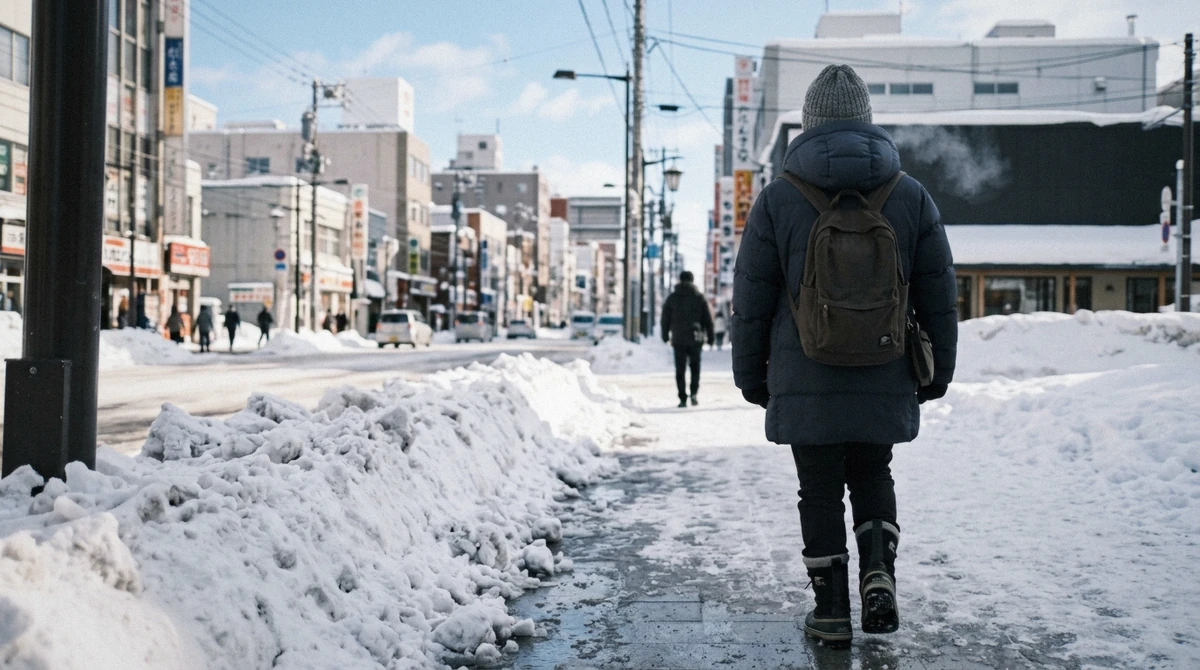
What to wear in Hokkaido in winter comes down to one honest fact: the tours provide almost nothing you put on your body, so layering, gloves and grip-soled boots are entirely your job. Only one listing in this catalog hands over any clothing at all, and even that one leaves out gloves. Sapporo's daytime high in January averages minus 0.4 degrees Celsius with 137 centimetres of snow falling that month alone, so this is not a light-jacket climate. Below is exactly what covers that, what the tours actually supply, and what you can safely leave at home.
Quick answer
Hokkaido tours provide almost no clothing beyond the ski day's helmet and goggles, so layering, gloves and grip-soled boots are entirely on you. A base layer, a fleece mid-layer, a waterproof windproof outer shell and clip-on ice grips cover most of what a Sapporo winter day actually needs. The kit list below assumes you are taking one of the Hokkaido day tours from Sapporo rather than driving yourself.
Key takeaways
- What's provided: only the ski day at Asarigawa supplies gear, helmet, goggles, skis and boots, and even it excludes gloves
- What's on you: base layer, waterproof outer shell, warm gloves and boots with real tread, on every tour without exception
- The #1 mistake: cotton, which stays wet and cold once you have walked ten minutes on packed snow
- Local number: Sapporo averages 4.79 metres of snow a year, with 137 centimetres falling in January alone
- Footwear answer: clip-on snow grips sold in any convenience store are the single most useful purchase of the trip
- Seasonal delta: March still averages 74 centimetres of snow, so pack for winter through the whole season, not just January
What to Wear, Layer by Layer
Base layer
A thermal base layer in merino wool or a synthetic wicking fabric, top and bottom, is the layer that actually keeps you warm; everything on top of it is windproofing and insulation, not heat. Fit should be close but not tight, so a mid-layer still fits over it without restricting movement on a boardwalk or a ski slope.
Mid layer
A fleece or a light down layer traps the warmth the base layer holds close to your skin. On genuinely cold days, two thin mid-layers beat one thick one, because you can shed one in a heated bus or a restaurant without stripping down to the base layer entirely.
Outer layer
A waterproof, windproof shell is not optional in Hokkaido; regular winter coats sold in warmer climates are rarely built for wind chill off the Sea of Japan. Look for a jacket rated for genuine snow conditions, not just rain, with a hood that closes over a hat.
Hands and head
Warm gloves and a hat that covers the ears are non-negotiable, and neither is provided on any tour on this page, including the ski day, which supplies a helmet and goggles but states gloves separately as excluded. A neck gaiter or scarf handles the wind that gets through everything else, especially on open viewpoints like the ones on the winter zoo run.
Footwear and the Ice Problem
Grip matters more than warmth
Sapporo's pavements turn to polished ice by January, and more visitors are hurt walking to a tour's meeting point than doing anything on the tour itself. Waterproof snow boots with a real tread are the starting point, but the tread alone is often not enough on compacted ice. Clip-on snow grips, sold in any convenience store for a few hundred yen, are the single most useful purchase of a Hokkaido winter trip: they strap over an ordinary boot sole and turn a slippery sidewalk into a manageable one.
Sneakers, even winter-rated ones, are the wrong call once the surface goes glassy, and dress shoes or anything without ankle support should stay in the suitcase entirely.
What to Bring
The checklist below covers what actually gets left behind by first-time winter visitors, not the obvious basics.
The winter packing list
Twelve items, each with the specific reason it earns a spot in the bag.
- [object Object]
- [object Object]
- [object Object]
- [object Object]
- [object Object]
- [object Object]
- [object Object]
- [object Object]
- [object Object]
- [object Object]
- [object Object]
- [object Object]
What Hokkaido Tours Provide, and What Is on You
Read Notes first. Only one listing in this catalog hands over wearable gear, and it still leaves gloves off the list.
The inclusion table
| Item | Usually Provided | Bring Your Own | Notes |
|---|---|---|---|
| Helmet | Yes, ski day only | No | Included on the ski day at Asarigawa; no other listing provides one |
| Goggles | Yes, ski day only | No | Same ski-day inclusion; not offered on any sightseeing route |
| Gloves | No | Yes | Explicitly excluded even on the ski day, the one tour that supplies the most gear |
| Skis, boots, poles | Yes, ski day only | No | Full kit is inside the ski day's $202.79 price |
| Lift pass | Yes, ski day only | No | Included in the ski day fare |
| Zoo admission | Yes, winter zoo tour | No | 1,000-yen Asahiyama Zoo ticket included on the winter zoo run |
| Snowmobile gear | Optional add-on | Pay on the day | Not guaranteed; the guide picks Shikisai-no-Oka or the snowmobile farm by how busy each is |
| Snow boots | No | Yes | No tour on this page supplies footwear of any kind |
| Snow grips | No | Yes | Sold in convenience stores; not part of any tour inclusion |
| Hand warmers | No | Yes | Sold everywhere in Sapporo but not included on any listing |
| Waterproof outer layer | No | Yes | No tour issues jackets beyond the ski kit |
| Transport and a guide | Yes, every tour | - | The one constant across all nine listings, summer or winter |
What Not to Wear or Bring
The list that saves luggage space
Cotton clothing of any kind, including jeans, which soaks through and stays cold rather than drying against your skin. Dress shoes, unlined sneakers or anything without a real tread, given how routinely Sapporo's pavements ice over. A flimsy umbrella, which the wind off open viewpoints like Cape Kamui or the Biei hills will turn inside out in seconds; a hood does the job better.
A heavy checked suitcase for a single day tour, since several meeting points involve stairs, subway exits and a walk before the bus itself. And ski gear you already own if you have booked the ski day: the rental kit is already included in the price, so packing your own boots and poles is dead weight for the rest of the trip.
Month by Month: December to March
How the layering shifts across the season
The core kit does not change across these four months; what shifts is how many layers you stack underneath it and how much weight you give to hand and foot warmers.
| Month | Average High | Snowfall | What Changes |
|---|---|---|---|
| December | 2.0°C | 113 cm | Full winter kit from day one; days are already short |
| January | −0.4°C | 137 cm | Second mid-layer; hand and toe warmers become standard, not optional |
| February | 0.4°C | 116 cm | Same kit, plus extra warmth for standing still at Snow Festival evenings |
| March | 4.5°C | 74 cm | Same outer shell and boots; only the base layer underneath can lighten |
December
Average high 2.0 degrees Celsius, 113 centimetres of snow for the month. The cold arrives fast and the days are already short; a full winter layering system from day one, not a gradual build-up.
January
The coldest and snowiest month on the calendar: average high minus 0.4 degrees, 137 centimetres of snow. Add a second mid-layer and treat hand and toe warmers as standard rather than optional.
February
Average high 0.4 degrees, 116 centimetres of snow, and the Sapporo Snow Festival brings the year's biggest outdoor crowds standing around ice sculptures after dark. Warm layers matter even more here because festival evenings mean long stretches standing still outdoors rather than moving.
March
Average high climbs to 4.5 degrees, but 74 centimetres of snow still falls that month, more than most visitors expect from what looks like a spring date on the calendar. The full winter kit still applies; only the layering underneath can lighten slightly.
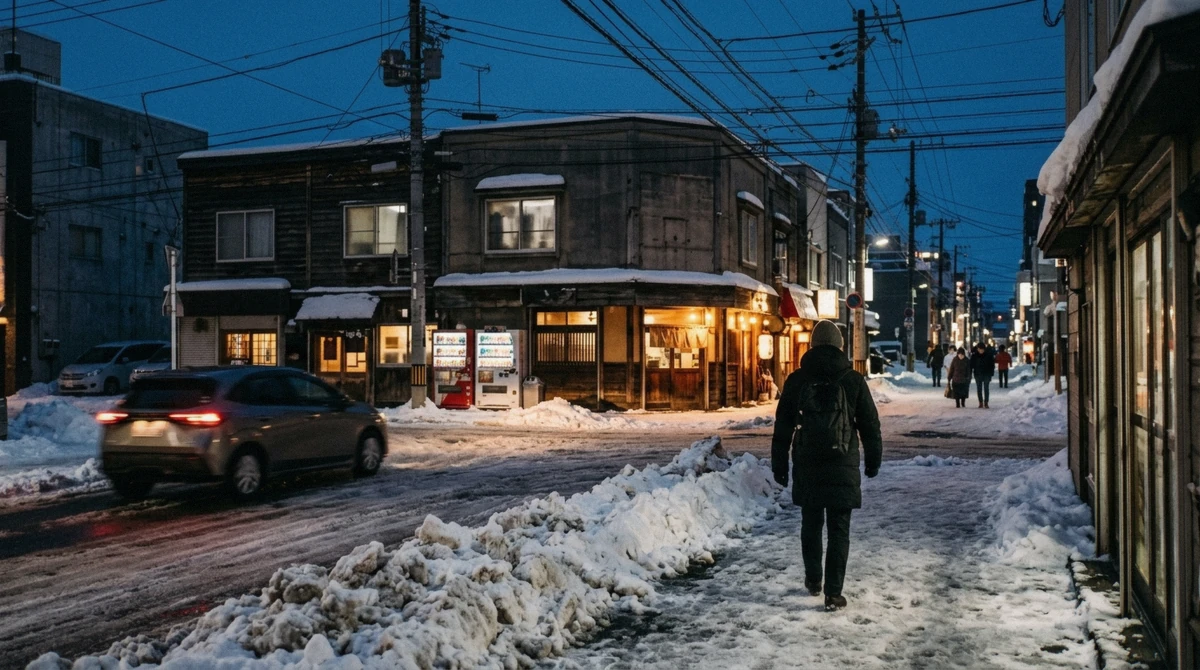
Central Sapporo in January. The pavements, not the tours, are the main hazard once winter sets in.
Photography and Camera Care in the Cold
Batteries and condensation
Cold drains camera and phone batteries far faster than the manufacturer's rating suggests, often within an hour of continuous outdoor use. Carry spares in an inner jacket pocket, close to body heat, and swap them before a battery reads empty rather than after. The bigger risk is condensation: moving a cold camera straight into a heated bus or hotel lobby fogs the lens and the internal electronics as warm, humid air hits the cold metal body.
Sealing the camera in a bag or pocket for ten to fifteen minutes before bringing it fully indoors lets it warm up gradually and avoids the fog forming on the glass in the first place.
Getting Winter-Ready Before You Book
The short version
None of this is complicated, but nearly all of it is on you rather than the tour. Layer properly, buy the clip-on grips before you leave the airport if you can, bring gloves regardless of which tour you book, and treat March like January rather than like spring. Once the bag is packed, the rest is picking dates: see what actually runs in a Hokkaido winter for which of the day tours out of Sapporo still operate once the snow sets in, and the season-by-season case for when to go if your dates are still flexible.
Questions About Winter Clothing in Hokkaido
Do Hokkaido tours provide winter gear?
Almost none of it. The ski day at Asarigawa is the only listing that supplies wearable gear, a helmet, goggles, skis, boots and poles, and even that one leaves gloves off the included list. Every other tour is transport and a guide only.
What footwear do I need for a Hokkaido winter tour?
Waterproof snow boots with real tread, plus clip-on snow grips for the icy pavements around meeting points. Sneakers and dress shoes are the wrong call once the ground turns to packed ice, which happens routinely by January.
How cold does it get in Sapporo in winter?
January averages a daily high of minus 0.4 degrees Celsius with 137 centimetres of snowfall for the month, the coldest and snowiest stretch of the year. Sapporo takes 4.79 metres of snow in an average winter overall.
Are gloves included on the ski day tour?
No. The ski day includes the helmet, goggles, skis, boots and poles, but gloves are stated as excluded, so bring your own warm pair regardless of how much other gear comes with the booking.
Can I wear jeans on a Hokkaido winter tour?
It is not a good idea. Jeans soak through in snow and stay wet and cold rather than drying against your skin, which is exactly the outcome a proper base layer and waterproof outer are designed to avoid.
Do I need special gear for the camera in cold weather?
Spare batteries kept in an inner pocket and a bag or pouch to let the camera warm up gradually before going indoors are the two things that matter most. Cold drains batteries fast and sudden warmth causes condensation to fog the lens and the body.
Is March still cold enough to need full winter clothing in Hokkaido?
Yes. March still averages 74 centimetres of snow even though the average high climbs to 4.5 degrees, so the full layering system still applies; only the base layer underneath can lighten as the season turns.